Explain Histogram
A histogram splits a single numeric variable into bins and shows how many values fall in each range. It answers: What’s the shape, center, and spread?
What is a Histogram?
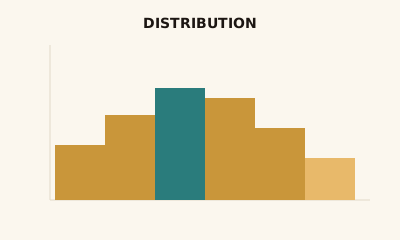
A histogram has one numeric axis (bins, or ranges) and a count (or density) on the other. Bars touch because bins are contiguous. It shows the distribution of one variable: shape, center, spread, and skew.
When to use a Histogram
Use a histogram when you have one continuous measure and want to see how it’s distributed—e.g. response times, salaries, conversion rates. It answers “how is this measure spread?” Use a box plot when you need to compare distributions across groups in less space.
How to read a Histogram
The horizontal axis is the measure split into bins; the vertical axis is count (or proportion). Tall bars are common values; short or empty bars are rare. Look at where the mass is, how spread it is, and whether it’s symmetric or skewed.
Common mistakes
Too few or too many bins (shape gets lost or noisy); confusing with a bar chart (histogram = one variable in bins; bar = categories).
Variations
Equal-width bins; equal-count (quantile) bins; with a density curve overlay.
Histogram in BI tools
Histograms are in Tableau, Power BI, Sigma, and Excel. Use for distribution of a single measure.
vs. other charts
Choose a histogram over a bar chart when you’re showing distribution of one numeric variable, not comparison of categories. Choose a box plot when comparing distributions across several groups or when you need a compact summary.
FAQ
What is the difference between a histogram and a bar chart?
Histograms show the distribution of one numeric variable in continuous bins (e.g., age ranges, price buckets); bar charts compare distinct categories. Histogram bars touch because bins are contiguous; bar chart bars often have gaps.
When should I use a histogram?
Use a histogram when you want to see the shape, center, and spread of a single numeric variable—e.g., response times, salaries, or conversion rates. It answers "how is this measure distributed?"
How do I choose bin size for a histogram?
Too few bins hide detail; too many create noise. Start with default bins in your tool, then adjust so the shape is clear. Equal-width bins are standard; some tools support equal-count (quantile) bins.
When should I use a box plot instead of a histogram?
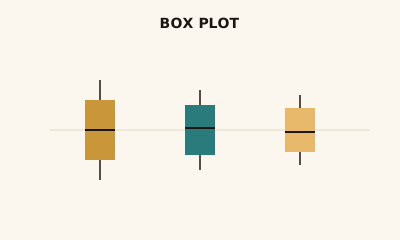
Use a histogram to see the full shape of one distribution. Use a box plot when you want to compare distributions across several groups (e.g., sales by region) or when you need summary stats (median, quartiles) in less space.
Have a chart you can't figure out?
Paste any chart screenshot and get a plain-English explanation in seconds.
Upload your chart →