Explain Combo Chart
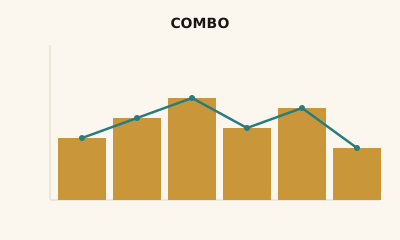
A combo chart layers two chart types—often bars and a line—on the same view, with two y-axes. It answers: How do two measures with different scales behave over the same dimension?
What is a Combo Chart?
A combo chart (or dual-axis chart) combines two chart types in one view—e.g. bars and a line—each tied to its own y-axis. The x-axis (often time or category) is shared. So you see two measures with different units or scale in one place.
When to use a Combo Chart
Use a combo chart when you have two measures with different scales or units and want to show both over the same dimension—e.g. revenue (bars) and conversion rate (line) by month. Avoid when one measure can be normalized to the other’s scale, or when the two series aren’t meaningfully related.
How to read a Combo Chart
Identify which series uses which axis (usually left vs. right y-axis). Read bars against one scale and the line against the other. Don’t compare bar height to line height directly—they use different scales. Use the legend and axis labels.
Common mistakes
Scaling the two axes to imply a false relationship; unclear which series uses which axis; combining unrelated measures.
Variations
Bars + line; area + line; two lines with dual axis.
Combo Chart in BI tools
Combo and dual-axis charts are in Tableau, Power BI, Sigma, Looker, and Excel. Use when two measures need shared context.
vs. other charts
Choose a combo over two separate charts when the shared axis (e.g. time) is important. Use a single chart type when one measure can be expressed on the same scale (e.g. index or percent).
FAQ
When should I use a combo chart?
Use a combo chart when you need to show two measures with different scales or units on the same view—e.g., revenue in dollars (bars) and conversion rate in percent (line). It keeps context shared (e.g., same time axis) while allowing two y-axes.
What chart types are usually combined?
Bars and a line are most common (e.g., volume + trend). You can also combine area and line, or two lines with dual axis. Choose so each series is visually distinct and matched to the correct axis.
How do I avoid misleading dual-axis charts?
Use two y-axes only when the measures are related in meaning but not scale (e.g., revenue and growth). Do not scale axes to make unrelated series overlap in a way that implies correlation. Label both axes clearly.
When should I avoid a combo chart?
Avoid when one measure can be normalized (e.g., both as index or %) so a single axis works. Also avoid when the two series are unrelated and comparison would be misleading; use separate charts or small multiples instead.
Have a chart you can't figure out?
Paste any chart screenshot and get a plain-English explanation in seconds.
Upload your chart →